Elevate Your Professional Image with Minimal Email Signature Templates
In the fast-paced world of digital communication, every interaction counts. Whether you are a freelancer pitching to a new client, a corporate executive closing a deal, or a creative professional showcasing your portfolio, the way you sign off matters. Often overlooked, the email footer is a prime piece of real estate that can reinforce your brand identity and provide essential contact information at a glance. This is where Minimal Email Signature Templates come into play, offering a streamlined, professional solution for modern communicators who value clarity and style.
The concept of minimalism in design is not just about using less; it is about making room for what truly matters. A cluttered signature filled with excessive graphics, multiple fonts, and disjointed colors can distract the reader and dilute your message. Conversely, a well-crafted email signature template utilizes whitespace, clean typography, and strategic alignment to guide the eye naturally to your name, title, and social links. By adopting a minimal approach, you ensure that your correspondence ends on a high note of professionalism and sophistication.
The Power of Simplicity in Digital Correspondence
Why choose a minimal design over something more elaborate? The answer lies in usability and compatibility. Email clients vary widely, from Outlook and Gmail to Apple Mail and mobile applications. Complex designs with heavy images or intricate coding often break when viewed on different devices or screens. A Minimal Email Signature Template is engineered to be robust. It relies on standard formatting that renders consistently across platforms, ensuring that your recipient sees exactly what you intended, whether they are on a desktop in New York or a smartphone in Tokyo.
Furthermore, simplicity breeds trust. When a potential client receives an email with a chaotic signature, it can subconsciously signal disorganization. A clean, organized footer suggests attention to detail and a respect for the recipient's time. It says, "I am professional, and I value clear communication." This psychological impact is subtle but powerful, contributing to the overall perception of your personal brand or business entity.
Key Features of High-Quality Signature Designs
When selecting a design asset, such as the specific template described here, it is crucial to understand the technical specifications that make it versatile. The ideal template offers a balance between aesthetic appeal and technical flexibility. For instance, a design provided in Illustrator AI format at 300 dpi RGB ensures that the visual elements are crisp and ready for high-quality export. While email signatures themselves are typically displayed at screen resolution (72 dpi), starting with a high-resolution source file allows you to scale elements, crop precisely, and export optimized PNGs without losing quality.
The dimensions of 600×200 pixels represent a sweet spot for email footers. This size is wide enough to accommodate a logo, name, title, and social icons side-by-side, yet compact enough to avoid triggering spam filters or overwhelming the email thread. It fits comfortably within the standard width of most email interfaces without requiring horizontal scrolling.
Another critical aspect is editability. A truly useful template must be fully editable. This means that every layer is organized, text fields are accessible, and colors can be changed to match your specific brand guidelines. You should not be stuck with a generic blue if your brand color is emerald green. The ability to customize fonts, adjust spacing, and swap out social media icons ensures that the final product feels uniquely yours, rather than a cookie-cutter solution used by thousands of others.
Who Benefits from These Templates?
The utility of a Minimal Email Signature Template extends across various professions and industries. Here is how different groups can leverage these designs:
- Business Owners and Executives: For leaders, consistency is key. Using a standardized template ensures that every employee represents the company with the same level of polish. It reinforces corporate identity and makes it easy for partners to find contact details.
- Creative Professionals: Designers, photographers, and writers can use these templates as a canvas to showcase their aesthetic sensibility. A minimal signature allows their work to speak for itself while providing a sleek link to their portfolio or social media cover design.
- Freelancers and Consultants: Building a personal brand is essential for independents. A professional signature adds legitimacy to your services, helping you compete with larger agencies by presenting a polished front.
- Real Estate Agents and Salespeople: In industries where networking is vital, having your photo, direct line, and social profiles clearly visible in every email can lead to more connections and conversions.
Integrating Social Media and Branding
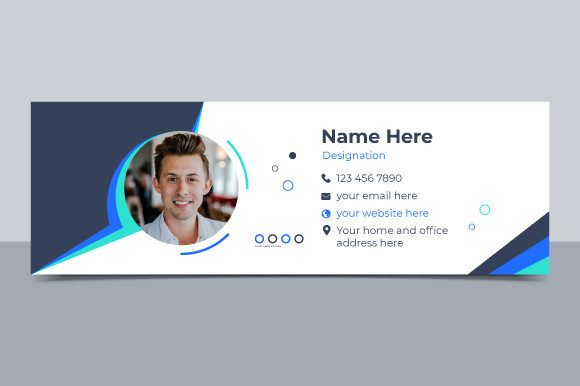
One of the most valuable features of modern signature templates is the integration of personal social media cover design elements. Your email signature is often the only place where you can legally and effectively include links to your LinkedIn, Instagram, Twitter, or Behance profiles. A minimal template organizes these icons neatly, usually in a row beneath the contact information. This invites the recipient to engage with you on other platforms without feeling intrusive.
When designing these elements, consider the visual harmony between your email footer and your social media headers. If your LinkedIn cover photo uses a specific gradient or font style, echoing those elements in your email signature creates a cohesive cross-platform experience. This consistency helps recipients instantly recognize your brand, regardless of where they encounter it.
Practical Considerations and Limitations
While Minimal Email Signature Templates offer numerous advantages, it is important to have realistic expectations regarding their implementation. First, remember that the preview image seen in download listings is often a mockup to demonstrate how the design looks in context. The actual downloadable file typically contains the raw design assets (like the AI file) which you will need to customize and export before inserting into your email client. This requires a basic understanding of graphic design software like Adobe Illustrator or access to a designer who can perform these edits for you.
Additionally, while the template provides the visual structure, the functionality of clickable links depends on how you implement them in your email settings. Most email clients allow you to hyperlink images and text, but the process varies. You will need to take your exported image or HTML code and correctly map the URLs to your social profiles and website. Testing is essential; always send a test email to yourself and a colleague to ensure that all links work and the layout remains intact on both mobile and desktop views.
There is also the consideration of file size. Even with a minimal design, embedding large images can increase the size of your emails. It is best practice to optimize your exported PNG or JPG files for web use, keeping the file size under 50KB if possible, to ensure quick loading times for recipients with slower internet connections.
Real-World Application Scenarios
To illustrate the value, consider a scenario where a marketing consultant sends a proposal to a prospective client. The body of the email is persuasive and data-driven. At the bottom, a clean, minimal signature displays the consultant's name, title, a small professional headshot, and icons for LinkedIn and a personal website. The client, impressed by the clarity and professionalism, clicks the LinkedIn icon to verify the consultant's background before replying. The signature acted as a silent ambassador, facilitating trust and further engagement.
In another example, a graphic designer includes a link to their latest project in their signature. Because the template is minimal, the link stands out without competing with other elements. A recipient curious about the designer's style clicks through, leading to a new commission. In both cases, the email signature template served as a functional tool for business growth, not just a decorative afterthought.
Making the Right Choice for Your Needs
Evaluating whether a specific template suits your needs involves looking at your brand personality and technical capabilities. If your brand is bold and loud, a strictly minimal black-and-white template might feel too restrained unless you customize the colors heavily. However, for most professional contexts, the versatility of a minimal base allows for enough customization to fit nearly any brand palette.
When downloading a package containing 300 dpi RGB AI files, ensure you have the necessary software to open and edit them. If you do not have Adobe Illustrator, you may need to collaborate with a designer or look for alternative formats like PSD (Photoshop) or even HTML versions if you prefer code-based editing. The "well-organized layers" mentioned in high-quality templates are a significant time-saver, allowing you to toggle visibility, lock background elements, and focus on editing text without accidentally disrupting the layout.
Ultimately, investing time in selecting and customizing a Minimal Email Signature Template is an investment in your professional reputation. It transforms a mundane administrative detail into a strategic branding opportunity. By prioritizing clarity, consistency, and ease of use, you ensure that every email you send leaves a lasting, positive impression.
In conclusion, the shift towards minimalism in digital design is not a fleeting trend but a response to the need for efficiency and clarity. A well-designed email footer respects the reader's attention while effectively conveying who you are and how to reach you. Whether you are updating your personal contact info or rolling out a new corporate identity, leveraging a high-quality, editable template provides the foundation for professional excellence in every digital handshake.