Unlocking Creative Potential: A Guide to Search Web Buttons and Fully Editable Vector EPS Graphics
In the fast-paced world of digital design, the difference between a professional, polished project and an amateur effort often comes down to the quality and flexibility of the assets used. Whether you are a seasoned graphic designer, a marketing professional, or a small business owner trying to create your own branding, understanding the tools at your disposal is crucial. Two specific elements that frequently appear in modern design resource libraries are the Search Web Button and high-quality Vector EPS files. While they may seem like simple technical terms, they represent a fundamental shift in how we approach creativity, scalability, and efficiency in visual communication.
This article aims to demystify these concepts, explaining why fully editable vector graphics are the gold standard for modern projects and how specific elements like search buttons fit into the broader ecosystem of user interface (UI) and web design. By exploring the technical advantages and practical applications, you will gain a clearer understanding of how to leverage these resources for maximum impact.
The Foundation: What Makes Vector EPS Graphics Superior?
To understand the value of a Vector EPS file, one must first distinguish between the two primary types of digital images: raster and vector. Most people are familiar with raster images (like JPEGs or PNGs), which are made up of a grid of tiny colored squares called pixels. When you enlarge a raster image, those pixels become visible, resulting in a blurry, jagged appearance known as pixelation. This is a significant limitation when designing for large formats, such as billboards or vehicle wraps.
In contrast, vector graphics are built using mathematical equations that define lines, curves, and shapes. This means a vector image can be scaled up to the size of a building or down to the size of a postage stamp without losing any resolution or clarity. The EPS (Encapsulated PostScript) format is a legacy but highly reliable file type that stores this vector data. When a resource promises that "all graphics are 100% vector," it guarantees that your design will remain crisp and professional regardless of where it is displayed.
Why Editability Matters in Professional Workflows
The true power of vector files lies not just in their scalability, but in their editability. A common misconception among beginners is that a downloaded graphic is a static picture that cannot be changed. However, with a well-organized EPS file designed for use in software like Adobe Illustrator, every single object is modular.
Consider the feature where "all objects' colors are editable." In a raster image, changing the color of a specific element often requires complex masking and repainting, which can degrade the image quality. In a vector environment, you simply select the shape and apply a new color code. This is invaluable for branding. If your company rebrands from blue to red, you can update an entire suite of icons and illustrations in minutes rather than hours. Furthermore, because these files utilize RGB Color Mode, they are optimized for digital screens, ensuring that the colors you see on your monitor are vibrant and accurate for web and mobile applications.
The Role of the Search Web Button in User Experience
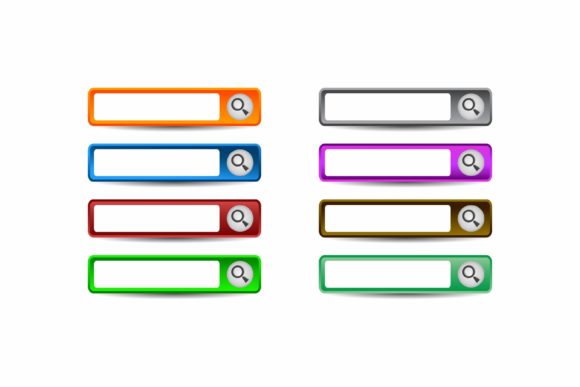
Moving from general graphics to specific UI elements, the Search Web Button is a quintessential example of how functional design meets aesthetic necessity. In the context of websites and applications, the search function is often the primary way users navigate content. A poorly designed search button can lead to frustration, while a clear, intuitive one enhances the user experience (UX).
When designers look for search button assets, they are not just looking for a magnifying glass icon. They are looking for a component that integrates seamlessly with their existing design language. This is where the concept of "fully editable typography" and compatibility with "every font or shape" becomes critical. A generic search button might clash with a custom website theme. However, a vector-based search button asset allows the designer to:
- Adjust the Shape: Change the button from a square to a rounded pill shape to match the site's border-radius settings.
- Customize the Text: Replace placeholder text like "Search" with specific calls to action like "Find Products" or "Explore," using the client's proprietary font.
- Modify the Iconography: Scale the magnifying glass or change its stroke weight to ensure it is visible on both desktop monitors and mobile screens.
Because these assets are "ready to use on the Graphic Style panel," they offer a level of workflow efficiency that is hard to overstate. Designers can save specific styles (e.g., a specific drop shadow, gradient, or stroke) and apply them instantly across multiple elements, ensuring consistency throughout the project.
Bridging the Gap Between Preview and Production
A frequent point of confusion for buyers of digital assets is the difference between the preview file and the actual working file. Most marketplaces provide a sample preview in JPEG. It is important to clarify that this JPEG is merely a low-resolution representation intended for browsing. It is not the file you will use for your final project.
The real value lies in the downloadable high-resolution files contained within the package. These files are "well-organized," meaning the layers are named logically, groups are separated sensibly, and unnecessary anchor points are removed. This organization is what allows the file to be "easy to use." For a beginner, opening a messy file can be daunting; for a professional, it is a waste of billable time. High-quality assets respect the user's time by providing a clean slate that is ready for immediate customization.
Practical Applications Across Industries
The versatility of fully editable vector graphics extends far beyond simple web buttons. Their application spans various sectors, proving their significance in modern life and business:
- Corporate Branding: Companies use vector logos and icons to ensure their brand looks identical on a business card and a highway billboard. The ability to edit colors ensures the logo adapts to different backgrounds (light mode vs. dark mode) without needing multiple file versions.
- E-Commerce: Online stores rely heavily on UI elements like search buttons, shopping cart icons, and product filters. Using editable vectors allows these elements to match seasonal themes (e.g., changing a search button to green and red during the holidays) without hiring a designer for every minor update.
- Education and Presentations: Educators and speakers use vector graphics to create clear, scalable diagrams for slides. Since projectors can sometimes distort images, vector graphics ensure that text and lines remain sharp, aiding in comprehension.
- App Development: Mobile apps require assets that look good on devices with varying screen densities (Retina displays, 4K screens). Vector assets scale perfectly to any resolution, reducing the need to export multiple sizes for different devices.
Clarifying Common Misunderstandings
Despite the clear benefits, there are still assumptions that hinder people from making the most of these resources. One common myth is that "vector files are too complicated for non-designers." While Adobe Illustrator is a professional tool, the rise of user-friendly interfaces and the "well-organized" nature of modern vector packs have lowered the barrier to entry. Many online editors now support SVG and EPS imports, allowing users to change colors and text without deep technical knowledge.
Another misunderstanding concerns fonts. When a product description states "Font not included," it does not mean the design is broken. It simply means that the specific typeface used in the preview is a licensed third-party product. The design file is set up so that any font installed on your computer can be applied to the text fields. This actually increases freedom, allowing you to use your brand's specific typography rather than being forced to use a generic one.
Conclusion: Investing in Quality and Flexibility
In conclusion, the integration of Search Web Buttons and Vector EPS graphics into your workflow represents an investment in quality, flexibility, and future-proofing. The promise of "100% vector" content ensures that your visuals will never suffer from pixelation, while "fully editable" features empower you to adapt designs to your unique needs instantly.
Whether you are refining a user interface, launching a new brand identity, or creating educational materials, the ability to manipulate colors, shapes, and typography is indispensable. By choosing resources that are well-organized, high-resolution, and compatible with industry-standard tools like Adobe Illustrator, you equip yourself with the foundation necessary to create professional-grade work. As technology evolves and screen resolutions increase, the reliance on scalable, editable vector graphics will only grow, making them an essential component of the modern digital toolkit.
Embrace the power of vectors. Explore the possibilities of editable design, and watch as your projects transform from static images into dynamic, adaptable works of art that stand the test of time and scale.